Congo Bongo

Liberation Day

Nineteen years ago today, Congo experienced its second liberation of the century. The first was in 1960, when it finally obtained independence from Belgium. Democratic elections were held, and Patrice Lumumba declared the winner. But Patrice wasn’t the favorite of Belgium, who still held financial interests in the region, nor the United States, who considered Africa a strategic proxy for the Cold War. So the powers-that-be made sure that Lumumba didn’t stick around long. In his place, they installed someone they considered friendlier to western interests, friendlier to business interests, an eager young up-and-coming general in the army, someone they thought they would have more influence over in the years to come. His name was Joseph-Desiré Mobutu, and he turned out to be one of the worst dictators Africa has ever seen. It’s because of him and his penchant for pocketing the country’s revenues (not to mention the rich donor countries that stubbornly and foolishly continued to send money) that Congo went nowhere but backwards on every possible measure of economic development, and to this day remains one of the poorest countries on the planet – despite being one of the richest in natural resources.

Oops.

Continue reading

Mother’s Day, Congo-Style

Today, like all days, mothers in households across Congo are quite likely the first to rise. They will wake their children and feed them, probably some tea and a little rice. They will sweep the house and the dirt around it until it’s perfectly striped, like a zen garden. (The better to keep snakes away.) They will wash clothes — by hand in a bucket, using water fetched from a well and carried home — then lay them out to dry on the shrubbery all around their house, or their roofs, just in time to catch the morning sun. Being a Sunday today, they will go to church dressed to the nines, high heels included. But most days, they will visit the local market and buy some beans and vegetables, maybe a protein like fish or caterpillars if they’re lucky, while spending probably no more than 1000 francs ($1) on a day’s meal. They will do all of this while looking beautifully clean and coiffed, balancing babies on backs, and the day’s purchases (or harvests from nearby fields) on heads. British writer George Monbiot said it best: “If wealth was the inevitable result of hard work and enterprise, every woman in Africa would be a millionaire.” Continue reading

Rollin’ on the Congo River (A Story of Silver Linings)

There’s a reason we’ve been living in Congo this long but haven’t taken any major vacations here. We’ve read nearly every book about this place we could get our hands on over the years, and every single one of them tells crazy stories about corruption and danger, sorcery and poisonings, exotic diseases and dramatic plane accidents. At the very least, and by far the most common, travelers suffer failed plans while they part with lots of cash to get moving, or to get past the authorities who notoriously mis-stamp passports so their compatriots down the road can collect fines.

Then there’s this lovely warning from the US State Department: Continue reading

Congo Cooking Lessons

Congo is not exactly renowned for its cuisine. You’ve probably heard of the spices and tagines that Morocco and Northern Africa are famous for, and you may have noticed an Ethiopian restaurant or two in big cities near you. (Tip: go in!) South Africa is known for its fabulous meats and sausages, whether in a braii, a potjie, or dried into biltong. India has lent its distinctive flavors to the cuisines of both South Africa (Cape Malay) and Kenya. The countries of Western Africa like Nigeria, Senegal, and Ghana have some iconic dishes. But Congolese food? Nobody’s heard of it.

I have two comprehensive African cookbooks that go into great detail about special foods and recipes from all over the continent. Congo is notably absent from both of them.

So it’s not a huge surprise that it’s taken me awhile to get into the groove here when it comes to local or regional cuisine. I’m not just talking about using what’s available locally, which I do all the time; what I’m talking about here is getting some kind of handle on bona fide Congolese recipes.

I hope you don’t mind if I take you on a multi-year journey here. You might want to tuck in after having had lunch or something; otherwise this is bound make you very hungry. (In a few cases, it might make you lose your appetite!)

Continue reading

Waste Not, Want Not

If my Facebook news feed is any indication, food waste is a hot topic these days. Everyone’s talking about it, from John Oliver to NPR to the Washington Post. I first heard about it from Barbara Kingsolver in her excellent book that I would super-highly recommend to any human being who eats food: “Animal, Vegetable, Miracle.” (Thanks, Lauren!) Basically, the story goes that in the United States, we waste between 30 and 40% of the food we produce. We trash 20 pounds of food per month per person. I imagine that’s more than a typical African eats! For sure, industrialized countries as a whole throw away almost as much food as sub-Saharan Africa produces. So your Mom was sort of right when she used logic such as “You’d better eat everything on your plate; there are starving kids in Africa” on you when you were a kid.

Continue reading

Plantain Panoply

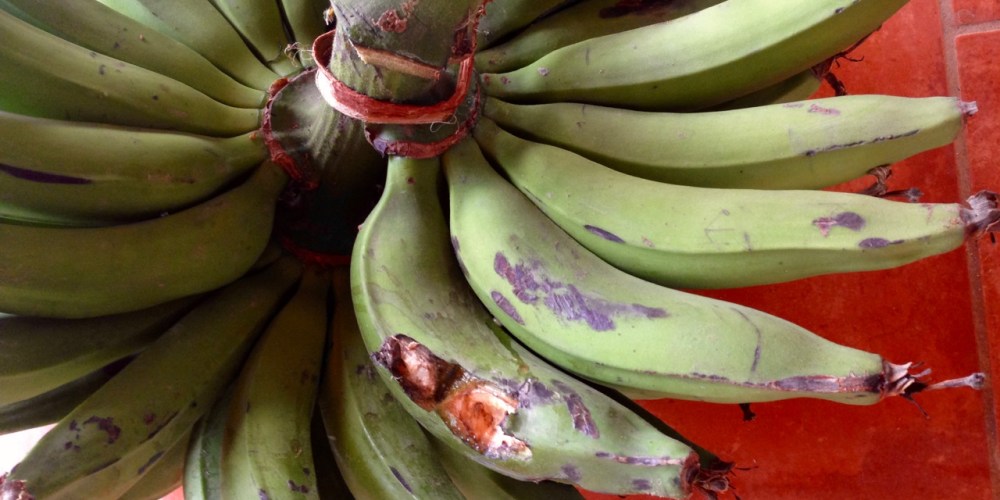
You would think plantains would be prolific here in Congo, where banana trees propagate by the side of practically every path. But somehow this paladin of Pan-African cooking perennially passes us by in the pandemonium of the public market here.

I have no idea why the plantain supply is so paltry, nor why I’m so partial to P’s. It’s been raining for three days straight now; I must be feeling a little pallid.

(Sorry. I’ll arrêt with the alliteration now.)

Continue reading

I Give You Good Price

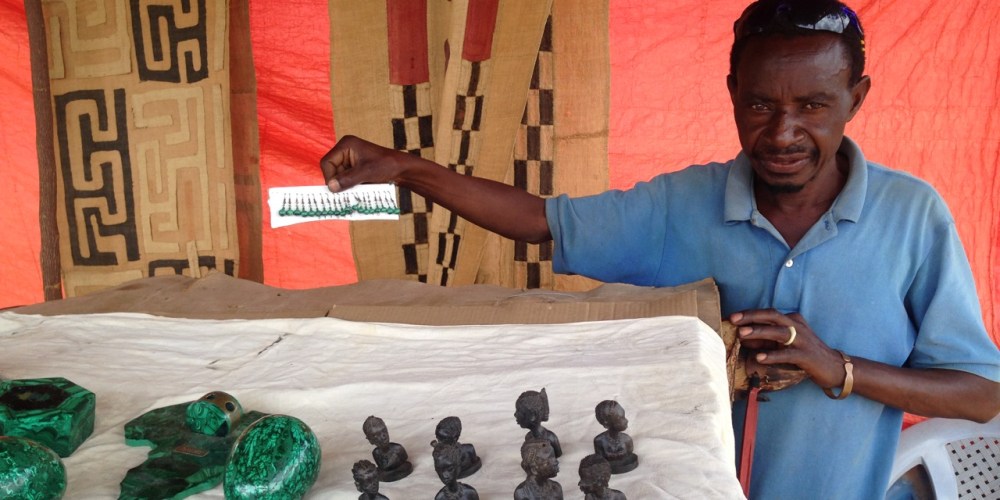
There must exist a handbook that every trinket-selling person across the globe has a copy of, and this must be its title. I’ve heard it from hawkers in South America, Mexico, China, India (oh my god, India!) and now, all different parts of Africa. In some cases it’s the only English some of these guys know, but they say it proudly and repetitively, despite the smirk it always elicits from me. As if all their competitors give me bad price.

Continue reading